| "The problem with the world is that everyone is a few beers behind." |
BeerNexus presents
The Beer Reporter Sounds Off On Beer !

Building a Keezer
Chris Marchio - sounds off on beer!
If you followed my last article and built your own “keezer" how about
using to serve some great home brew? Here's my recipe for something
truly special - Chocolate IPA.
SRM: 25
OG: 1.060
FG: 1.010
Boil Time: 75 min
Primary fermentation: 8 days
Secondary fermentation (dry hop): 8 days
Conditioning (Keg): 10 days @ 16 PSI until proper maturation and
carbonation levels. Bottles should be at least 3 weeks
9 lbs. US 2-Row
1 lb. Munich
0.5 lb. Cara-Pils
0.5 lb. Carafa III
0.5 lb. Crystal 80
0.5 oz. Chocolate
1oz Cascade: FWH
1 oz. Warrior: 75 min.
1 oz. Chinook: 60 min
.5 oz. Amarillo: 45 min
0.5 oz. Australian Galaxy: 30 min
0.5 oz. Amarillo: 30 min
.0.5 oz. WL Sorachi Ace: 15 min.
0.25 oz. Australian Galaxy:15 min
0.5 oz. WL Amarillo (7.2% AA): 15 min.
0.25 oz. WL Sorachi Ace:5 min.
0.5 oz. WL Amarillo: 5 min.
0.25 oz. Australian Galaxy: Flameout
0.25 oz. WL Sorachi Ace: Flameout
1 oz. Whole Leaf Simcoe - Dry Hop 7 days
Wyeast 1056 American Ale Yeast w/ Start
Mash at 152 for 60 minutes, sparge to boil volume (6.5 gal)
*next time I plan on experimenting with small amounts of dark chocolate
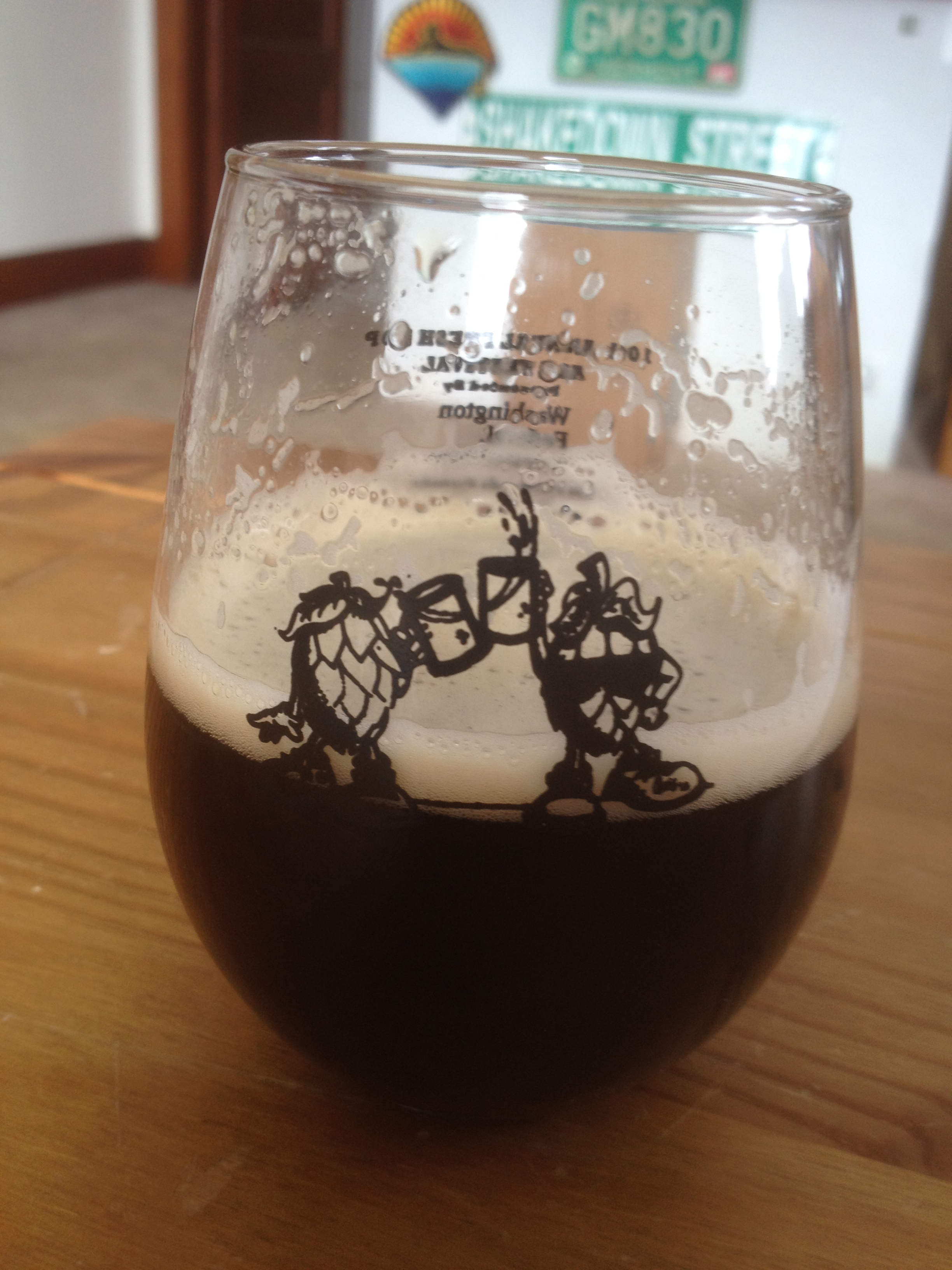
This is an experimental batch that I brewed specifically for winter with the
hopes of tweaking the traditional styles already available. I called it a
“Chocolate IPA” because unlike porters or stouts, which use specialty
ingredients such as coffee beans, chocolate, or oatmeal, this beer is
brewed very much like a traditional Ale malt wise, but using way more
hops, exactly what the United States is known for! The end result is
difficult to match to a single style, but if I had to, I would say Cascadian
Dark Ale would be the closest.
A common theme among Cascadian Dark Ale’s is that it is supposed to
taste exactly like an IPA, but the color is opaque. One way to use the
dark specialty malts without infusing the astringent tannin flavors from
the husks is to cold steep the grains over night to use in your mash.
Roasted, chocolate aromas are typically thought of as a distraction and
over power the sensitive hop characteristics. This is why stouts and
porters are never heavily hopped.
My goal was to find the proper balance of hops and chocolate
characteristics for a smooth, unique flavor. Another trick for this recipe
was using a small amount of chocolate malt. A darker malt known for its
spicy, clove, and chocolate aromatic qualities. I also experimented with
Sorachi Ace hops, an intensely spicy Japanese style of hops that I
thought would compliment the malt bill well.
The final result is a fusion beer that I’m proud to say exceeded my
expectations. It has the “in your face” hop punch in the nose that I look
for in IPA’s, but is followed by a smooth chocolate aroma. The nose is
powerful and sticks around for a few minutes. The tasting experience is
very similar. It initially tastes very much like an IPA, but then the hop
forwardness is followed by some of the roasted chocolate qualities, but
not overwhelming. There is also a mild spicy presence from the Sorachi
hops that blends into the overall experience quite well.
This beer is a perfect, unique winter beer that I would say goes really
well with a bacon smoore made with dark chocolate after a long day
skiing. If you have never tried a bacon smoore (that’s a whole other
discussion), I highly recommend it.
Let me know if you try brewing it and be sure to tell me what you think!
By the way, if you are interested in other brewing recipes and tips
please check out Arny Lands excellent column right here on BeerNexus.
Happy 2013, cheers!
Chris
"The Beer Reporter"
| the scoop from Beer Reporter CHRIS MARCHIO |

 |
| |
 |
 |
| |
 |