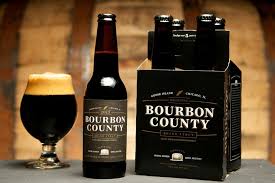
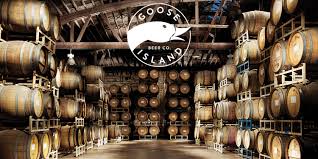
Does It Add Up? For BeerNexus.com Hey we’re in the middle of summer, longer days and hot sunny weather so we should be thinking about anything but something that’s mentally challenging. What is it we would yell at the end of the school year; no more teachers, no more books... ? Well I’ve always liked and been good at math and spatial relations so I wanted to look at something that, well, I wasn’t sure was adding up. And just so you know I’m not just puffing my chest on the math angle I’ll give you a little personal history. In sixth grade they handed out an award to the best student in each subject in each class and I got the math award in my class. Back in the good old days we started Jr High in seventh grade so sixth was the last time we were in the same class with everyone else for a year, so made some sense. In ninth grade most of us took algebra and I was pretty sure I got a 100 on my New York State Regents exam. The teacher actually laughed at me when he gave me my grade; a 99. I never did learn what I lost one stinking point on! Tenth grade was geometry and I didn’t do nearly as well, I only got a 96 my Regents that year. And in my senior year I took calculus in addition to the regular twelfth grade math. And by the way we didn’t learn the “new” math, where today’s kids have no clue how to figure anything out in their head, we learned the old, good, for use in everyday life math. Okay so enough regaling you with my math proclivity from decades ago, where does this all tie into craft beer? Well if you’ve been drinking craft beer for any length of time you’ve seen the tremendous rise in the number of breweries, you’ve seen the incredible popularity of IPA and you have and are seeing the change to not just create a great beer and keep doing it, but to be constantly changing the beers coming out of the brewery to attract those of us who want to try the latest beer. Somewhere in the 1992-94 timeframe Goose Island (which was a craft brewery until they shocked the craft beer world and sold out to AB/InBev in 2011) produced the first bourbon barrel aged beers. It seems that Greg Hall, the brewer and son of owner John Hall, was invited to attend a beer, bourbon and cigar dinner at LaSalle Grille in South Bend, IN. Representing bourbon was Jim Beam’s grandson and master distiller, Noe Beam. Having the opportunity to “rub elbows” Greg and Seth Gross, another Goose Island brewer, found Noe very friendly and one story he told them made them start thinking. After emptying a bourbon barrel they would add a couple of gallons of spring water, roll it around and then pour it out over ice for an end of the day drink. Greg had been looking for something special for the 1,000th batch and just by coincidence here was the germination of an idea that became the classic Bourbon County Brand Stout. Luckily or probably smartly, Greg also decided to put an imperial stout into those first six bourbon barrels, which as it turns out is a perfect match. A 1995 GABF medal in the Strong Ale category (since there was no barrel aged category yet) didn’t hurt the early years of what is now a pioneering beer either. Let’s do some of my favorite stuff and look at some of the numbers. A bourbon barrel is 53 gallons, so if we “do the math” that’s 6,784 ounces, which is about 23 cases of 12 oz. beer. That’s not all that much in one barrel. And keep in mind, in the early stages many brewers used 22 oz. bottles and many are also using the 16.9 oz. bottles today. In draft terms a Sixtel is 13.2 gallons so four sixtels per barrel, if you’re not wasting a drop. On the shelves and in the bars today, there are tons of barrel aged beers. If I had to guess (and yes I do because I have no clue where you might find a statistic like this) I would generously say a third to half of the craft breweries do any barrel aging; so at this point maybe 2-3,000. Why not more you say? Well most new breweries are tight; tight on cash, tight on space, tight on equipment, tight on staff. They’re starting a business and need to start with the basics of brewing beer that customers will want to try, hopefully like and continue to purchase. Just the fact you need to age the beer isn’t what startup breweries are really capable of doing. And that’s just craft brewers, factor in all the non-craft, such as Goose Island, and think of how many barrel aged beers are being made. So where are all these bourbon barrels coming from? Isn’t there a finite number? And since bourbon has been made for a century or two before brewers started using their barrels, what did they do with them before? A bourbon distiller may age their spirit for as little as three months, but I think that’s probably akin to a $0.99 a six pack beer, like an Old Milwaukee or something similar. Most bourbon is probably aged at least two years, some ten to fifteen; the more color and flavor the longer they’ve been aged. That means there could be a variable amount of barrels available every year. According to the Distilled Spirits Council, their trade organization, previous to us craft breweries wanting their barrels they were sold to distilleries in Canada, Scotland, Ireland, Mexico and the Caribbean to age other spirits. So if they had a market for them how did craft brewers start getting them? Did we just outbid them? That can’t be the answer as the used barrel wholesalers have long term relationships with other distillers who are buying a lot more of them than we initially wanted. We were probably just picking up extras in the early days. According to the Kentucky Distillers Association, bourbon production was 1.13M barrels in 2013 and 1.15 in 2015. Production is approximately 20% of inventory. In 2016 almost 1.9M new barrels were filled and inventory was up to 6.7M barrels. Interestingly barrel inventory was approximately 4.5M in 1985 but shortly thereafter fell below 4M. It was stable between 3.5 to 4M barrels for thirty years until around 2005 when inventory finally crossed 4M barrels again. As we’ve seen, and makes perfect sense, craft distilling and spirits have also been on the rise along with craft beer. In 2009 there were 19 licensed bourbon distillers in KY. By August 2016, there were 52. And yes I’m comfortable using just KY numbers to make a case as 95% of all bourbon produced is made in KY. It definitely appears there has been an increase in the availability of bourbon barrels for craft beer use. But many brewers have also gotten creative, either out of necessity, availability and/or cost, or possibly just plain experimentation, and are using barrels from tequila, rum, scotch, rye whiskey, wine, brandy, apple brandy, sherry and even maple syrup. The other important issue with bourbon barrels is their freshness, in other words, it is best to use a “wet” barrel which means they are only a few weeks removed from being empty. A wet barrel will retain the flavors for a few months if conditioned properly. Last year a local brewer whose beers are mostly pedestrian actually got a freshly emptied barrel on a visit and brought it back with him. The beer he aged in that barrel was incredibly good, which taught me a lot about the flavor ability of a wet barrel. Second use barrels can run in the $30-40 range, but some of the nicer and more in demand ones can easily run over $100. I decided to take a look at the other classic; Founder’s KBS or Kentucky Breakfast Stout as it was initially named. You remember the one with the baby on the label that they had to take off! KBS was first produced in 2003. In 2010 they only released 300 cases, which if you do the math is not quite thirteen barrels, although I have no clue how much would have been on draft and/or if they held any back or gave to employees, etc. so we'll never really know how many barrels they were using then. Today they have their Barrel Aged Series which includes Backwoods Bastard and Dankwood in addition to KBS. Founders may be somewhat unique as they use old underground caves, which were a gypsum mine, 85 feet below the surface to maintain a constant temperature, which happen to be six miles from their brewery. They have 7,000 barrels, many from premium distillers like Jim Beam, Heaven Hill, Buffalo Trace and Maker’s Mark, so they obviously have access to high quality barrels. They are not the only entities using this storage space and they recently announced in January they’re not only going to fill their city block space but also expand to another barrel aging facility in Grand Rapids. Sounds like demand for their barrel aged beers is high. Back to Goose Island; they have a separate, above ground, 130,000 square foot Barrel House. They want the barrels to be exposed to changes in temperature and humidity as opposed to the consistency that Founders wants. I’m guessing both methods can produce a good product... Their Bourbon County Brand Stout is aged in Heaven Hill barrels, again a top of the line distiller and in 2018; they have seven variants, speaking to their success and popularity. At a recent stop at Cricket Hill I asked founder Rick Reed a couple of questions about bourbon barrels as he’s been doing it for years. My first question was, are they readily available. He said you go through a company that handles their distribution and you can get them, but he also echoed the other theme I’ve heard; they getting expensive. He also told me something interesting, they use the barrels twice; the first time adds the bourbon nuances to the beer and the second time will add the oaky char of the wood to the beer. Very interesting and I wonder how many brewers are doing that. So where does all this info leave me. Well I’ve tasted some incredibly good barrel aged beers and I’ve tasted some that are way too boozy in flavor and some very high in ABV. Based on what I see on the shelves and taps and read as well as what two of the bigger producers are doing I’m guessing barrel aging beer is here to stay. I also get that the cost of the barrel, the place to store it and all the additional attention and handling make barrel aged beers more expensive. And although I haven’t mathematically proven that they’re really are enough bourbon barrels to go around for all the brewers that want them, I think the big increase in bourbon barrels by distillers closes any gap there might have been…for now. But hey it’s too hot for a big barrel aged beer right now; I think I’ll have a pilsner or maybe even a kolsch… Glenn DeLuca writes about beer and culture of drinking. He may be reached by writing thebigG@beernexus.com. *** *** *** |
Glenn DeLuca

Outtakes from a life of beer.
beernexus.com presents
| Big G's Beer Beat by Glenn DeLuca |


| BeerNexus is proud to welcome beer writer Glenn "Big G" DeLuca as a contributor to the site. A widely traveled beer hunter, Glenn is a leading advocate for the growth of craft beer. |
| More from the BIG G The complete index of all Big G's Beer Beat HERE |
click to enlarge pictures


 |
| |
 |
|
| |
|


-