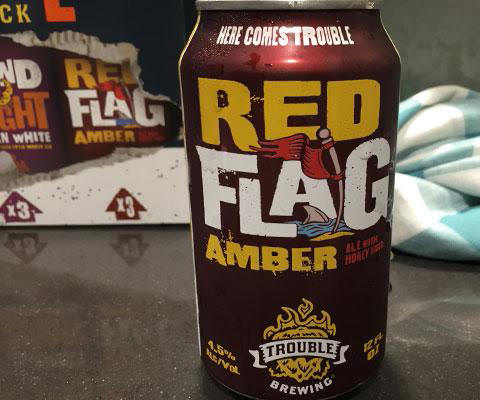
| Numbers Don't Lie By Glenn DeLuca For BeerNexus.com We’ve all been presented, whether at work or on the news or watching a sporting event with statistics where the presenter will use them to back up his or her point. Sometimes the stat is very interesting and may cause you to look at something in a different light. Other times, especially in sports, it may well cause a heated discussion. And then sometimes a day or two later someone else presents the same topic using a different combination or comparison of the same or related numbers that would lead to a different or reverse conclusion. We’ve also come to learn that, at times, it can be critical to understand the context of the stat; like comparing baseball or football players today vs fifty years ago. Yes they play the same position but the game was played differently back then with slightly different rules and definitely less statistics being collected and used. I really love it when I know more about the subject/issue being discussed and I’m immediately yelling at the presenter on TV, why they just presented a bogus stat. In today’s craft beer world, the statistician on the Brewers Association (BA) staff probably has one of the most challenging jobs. No, I didn’t go to check to make sure they actually have one on staff, but “Statistics” is one of the eight website categories with dropdowns, so I’m drawing a conclusion. And if they don’t have at least one, I think they don’t understand the marketplace and how statistics affects their mission; which putting it simply is to promote craft beer. Craft beer is still developing and evolving, so the BA has had to, every so often; tweak the definition of which breweries should be included as “craft breweries”. In the beginning it was pretty easy, but as the market continued to grow issues arose. Early on it was easy to tell that Shock Top and Blue Moon were craft “knockoffs” by the big brewers so they wouldn’t be included. But then one of the breweries most responsible for fostering craft beer, the Boston Beer Company, maker of Sam Adams, was getting larger than two million barrel production limit. It made no sense to say they were no longer craft because they were successful, so the limit was raised in 2010. And then the bigs aka AB/InBev, MillerCoors, etc. decided it would be easier to divide and conquer so they began buying breweries. Even though virtually every brewer said their new owner was not interfering with how they make their beer; they had to be excluded from the BA list of “craft” brewers. And some venture capitalists have joined the fray, seeing a growing market where they believe they can make money, so those relationships have excluded more breweries. New breweries are popping up like rabbits multiple; we now have over five thousand, but the production of these new breweries is very small and doesn’t make up the production lost when a Goose Island or Lagunitas or Ballast Point gets bought or merges. The BA also played with the formulation definition a couple of years ago and decided to allow those who use adjuncts like rice or corn, so all of sudden Yuengling, America’s oldest brewery, is considered craft. Do I consider Yuengling a craft brewer; not really. It’s a nice lager I do enjoy more so in the summer, along with an occasional Lord Chesterfield Ale and I was pleasantly surprised when they came out with an IPL last year. So I hope they will continue to experiment but that doesn’t really make them a craft brewer. And then a month ago someone wrote about why Pabst isn’t considered a craft beer. Although they are within the six million barrel production limit, the BA has a bunch of reasons; primarily much of their beer is contract brewed by MillerCoors and their multiple international partners. But to be fair Boston Beer was doing some contract brewing early on before the BA was founded in 2005 and Brooklyn Brewery produces a fair amount of beer for export, but hasn’t been declassified as craft. So you could do some nitpicking, but let’s be real; we’re talking PBR here; been around a long time and no it’s not craft. Not to mention their portfolio of about thirty brands (all bought cheaply when in distress) including Schlitz, once the largest brewer in the country, and many fine regionals like Stroh, Olympia, Ballantine, etc. Again don’t get me wrong, I love the Ballantine IPA and the Ballantine Burton Ale at the holidays and I would consider them craft revivals, but Pabst brewing is not and should not be considered craft. Another interesting brewer on the list is Narragansett, or as I used to call it years ago “Nasty-gansett”. Again a popular regional, bought by Falstaff and then run into the ground. Changing hands a bunch of times it was bought in 2005 by a RI group that has revived it and now it’s a craft, really? Gansett is your basic lager and yes they have branched out with a Fest, Heffe, Coffee Milk Stout, Cream Ale and LoveCraft black lager. I don’t know what percentage is lager and light vs the crafty styles but I doubt craft is the majority. So what percentage of US produced beer is craft; I think that’s anybody’s guess or statistical analysis. Based on all the breweries dropping off the list you might think craft beer production is diminishing, but although Goose Island is part of AB/InBev and Ballast Point part of Constellation and Lagunitas half owned by Heineken, they still make craft beer. And in reality with increased revenue streams and access to other brewing facilities and advertising they probably are making more now than before. We all know we can’t put complete trust in the bigs, vis-a-vie the recent “Rare” Goose Island BCS fiasco, but we also can’t discount all their beer as not being craft. So looking at the craft beer stats from year to year is a challenging issue. I think trying to measure the craft beer industry is like a water balloon where trying to define its shape could be altered by your hands, the wind, the sun, etc. And to that issue a recent article titled, "You’ll Never Guess Who’s Jumped Into the Craft-Beer Business", caught my eye. The sub title; "With the craft-beer industry slowing, this new brewer could revive its prospects", so now I need to keep reading as there’s no way the industry is “slowing” and I haven’t heard anything about one specific new amazing exciting brewer that’s taking the industry by storm. I continue and read the first sentence and immediately look at my calendar as I’m sure it’s April 1st. It read, “Can Wal-Mart save the craft-beer industry?” After I get back into my chair, my immediate reaction is Whiskey Tango Foxtrot; no way in you know what. But I will read on to find out what the deal is. First the author talks about after years of double digit growth, craft breweries are expected to post single digit in 2016. BA is saying about 8%, but it could be lower; I think Chicken Little has entered the room. He then goes on to use IRi, an American marketing research company, which focuses on the consumer packaged goods industry, to further bolster the view that craft beer is hurting. Much of the weakness is blamed on some of the larger ones like Boston Beer, Craft Brew Alliance, New Belgium, Pabst, Gambrinus and Shock Top all suffering from lower sales. CBA, Pabst and Shock Top are not considered craft by BA but probably included by a market research group like IRi, which again points out how difficult it is to define the world of craft beer. He does point out a few, like Dogfish Head, Lagunitas and Constellation are doing well in 2016 so it’s not all gloom and doom. I find it very interesting with more breweries and more money pouring in and the broad view taken, that one could come to the conclusion the craft beer industry is in decline. I’m having a hard time with that one, which I think makes my point on how statistics can be used in many ways. But now on the really fun part…so how is Wal-Mart going to save us? Obviously they have begun to sell craft beer in some of their supermarkets under the Trouble Brewing brand and he does fess up that it’s being contract brewed by WX Brands, so yea there is no new brewer saving us. They have a variety of styles and in typical Wal-Mart fashion a 12 pack is about $13. As I’m sure most of us are thinking; I’m really not that interested in running out and getting any to try, although in a blind tasting it might do okay. The author does address the “snobbery” in the craft beer market, but he does say Wal-Mart may introduce craft beer to many consumers who might not normally have considered it before. Wal-Mart does have a reputation for having a, shall I say, lower class shopper amongst its clientele. I strongly believe they all know and frequent their local liquor store/beverage barn/whatever you call it each state to purchase the mass produced suds of their choice. So yes maybe they would be willing to buy some “inexpensive” craft beer to try it, but it better be decent or it will just drive them back to regular beer. I did find a review by a woman who was headed to a Cicerone event, so I’m thinking she knows good craft beer, and her kindest comment was “it was beer”; most had less taste for the style than you would expect. So again maybe good for some of the Wal-Mart clientele, but not the craft beer consumer of today. Years ago when we tried Anchor Steam or Sam Adams we were getting a good tasting beer that enticed us to want to try others and spurred us on to the robust market we have today. And for those of us craft beer drinkers who believe in symbolism I would like to point out their amber ale; it’s called “Red Flag.” Maybe they were sitting around the table tasting it while trying to decide the name and wham there it was. Going back to title of the article; so how is this new brewer that isn’t a new brewer, who’s making so-so beer, going to save the craft beer industry? I’m going to send a letter of recommendation to the Trump administration because I think this author has already mastered the use of alternative facts and would be a good fit. But I’ll have to keep Trouble Brewing in mind though, in case I need a good gag gift next Christmas… Glenn DeLuca writes about beer and culture of drinking. He may be reached by writing thebigG@beernexus.com. *** *** *** |
Glenn DeLuca

Outtakes from a life of beer.
beernexus.com presents
| Big G's Beer Beat by Glenn DeLuca |


| BeerNexus is proud to welcome beer writer Glenn "Big G" DeLuca as a contributor to the site. A widely traveled beer hunter, Glenn is a leading advocate for the growth of craft beer. |
| More from the BIG G The complete index of all Big G's Beer Beat HERE |
click to enlarge pictures


 |
| |
 |
|
| |
|


.,