


 |
| |
 |
Home Runs and Hops
Although it's currently the dead of winter, I've
decided to write about beer and baseball for
several reasons. One is that thinking about
the subject makes summer seem much closer.
Of course, another is the close relationship
that has always existed between America's
two National Pastimes, and finally, to explain
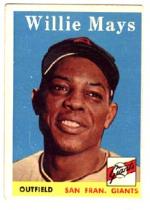
why Willie Mays has a lot in common with
America's micro breweries. More about that
later!
Is there anything more relaxing on a cold
winter's night than sipping a winter brew and
flipping through the pages of a beer or
baseball book and reflecting on the scenes
depicted therein? The ad reproductions from
the 1950's always portray a man lying in a
hammock, listening to the radio, and holding
a can of Pabst, while ignoring his lawnmower,
parked in the half cut grass. He's not listening
to football, the news ,or the Metropolitan
Opera. He's listening to Mel Allen yelling
about a "Ballantine Blast", Curt Gowdy
greeting you with "Hi Neighbor! Have a
"Gannssett", or Bob Prince urging the Pirates
to "Pour on the Iron"! Most of the greatest
beer commercials and jingles were introduced
to us between innings of a baseball game.
Who can forget " Schaefer is the one beer to
have when you're having more than one",
Chief Totem Home Plenty(Ballantine), or Leon
Janney in the Rheingold Rest, illustrating
tricky plays with the imaginative use of bottle
caps as bases and baserunners. In the early
days of the Mets, one didn't even have to
wait untill the half inning, as it was not
uncommon to hear Bob Murphy plug his
sponsor by saying "Oooooh! .....Just foul by a
six pack of Rheingold!". Although they were
not clued in in advance ,the Greisidieck
Brewery was the unwitting sponsor of a
memorable baseball event: the birthday
party of the hapless St. Louis Browns, at
which owner Bill Veeck introduced the
diminutive Eddie Gaedel as the only midget to
officially bat in a major league game. Without
the sponsorship of the brewery, Mr. Gaedel
would not be found in the record books.
Many early club owners such as Jacob Ruppert
and Chris Von der Ahe were beer barons ,and
many early and present day ballparks reflect
this interest: Ruppert Stadium in Newark,
Busch Stadium in St. Louis, Sicks' Stadium in
Seattle and Coor's Field in Denver are a few
examples. Sunday baseball came about ,in
part ,because it offered an alternative to beer
gardens, which were the usual Sunday choice
of America's working class in the 1880's. In
fact, in "The Shortstop", a novel by Zane
Grey,when star shortstop, Chase Alloway
,refuses to play on Sunday because it might
cause his mother to have a stroke, he is
finally persuaded to do so because "several of
the bigger gardens have closed down on
Sunday" due to the competition from
baseball. Of course, in addition to being
master brewers, the beer barons were also
master businessmen, and it wasn't too long
before the ballparks had their own beer
gardens in the outfield. The old American
Association became known as the "Beer and
Whiskey League" because alcoholic beverages
were sold in it's parks long before the older
National League took advantage of this great
opportunity to turn bigger profits.
Modern minor league baseball offers the
baseball fan and beerfan more than just the
affordibility of it's tickets, the accesibility of
it's parks and proximity to the action on the
field. In the past few years I've had the
pleasure of drinking Flying Fish at the Camden
Riversharks, Sam Adams and Anchor Steam at
the Newark Bears, Cricket Hill at the New
Jersey Jackals and a whole gamut to chose
from at the Somerset Patriots, Trenton
Thunder and New Jersey Cardinals. These
wonderful beers are a far cry from the watery
slop one usually finds at major league parks.
Beer and Baseball causes us to laugh. As a
youngster, I remember reading about the
aforementioned Chris Von der Ahe who
intoduced the "German Disturber" to the
game. This was simply a barrel of his beer
positioned in foul territory near third base.
The idea was that any man who safely
reached third could help himself to a stein of
the refreshing brew, ostensibly to motivate
runners to stretch doubles into triples, or to
steal third base. Unfortunately, the disturber
also had a damning effect: batters who had a
clear shot at an inside-the -park homerun
would often err on the side of caution and
stop at third, and runners who were already
there wouldn't think of tagging up after a fly
ball in order to avoid a double play. The
"Disturber", which didn't last long, evidentally
had more influence on the couse of the game
than did the third base coach!
Although beer, by itself, was probably not the
only beverage behind Hack Wilson's well
known propensity to imbibe alcohol, it may
have had something to do with it, and
therefore makes for a good beer
story.According to baseball legend, Wilson's
manager, Frank Frisch, The Fordham Flash,
(how's that for alliteration?) decided to
demonstarte to Hack the harmful effects the
heavy drinking had on his stats.( Wilson's 56
homers in a single season was a National
League record for sixty years and his 190 RBIs
in a season will probably never be equalled).
Frisch set two beakers in front of Hack, one
filled with water and the other with pure grain
alcohol. Into each he dropped an earthworm.
In the water the worm wriggled and swam,
but in the alcohol the worm curled up and
sank to the bottom, obviously dead. When
Frisch asked Hack if he had learned anything
from the demonstration, the slugger replied,
"Sure, ...if ya have worms...drink!"
Finally, an explanation of why Willie Mays,
arguably the greatest player who ever lived,
and himself a teetotaler, is like American
microbreweries. Mays' first manger, Leo
Durocher, was often quoted a saying that
there are five things a man must do in order
to be classified as a great baseball player:
run, field, throw, hit, and hit with power.
There were faster players than Mays and
there were better centerfielders. There were
outfielders with better arms and many players
who hit higher than Willie's lifetime average.
There are now four players who have hit more
homeruns, and thanks to steroids, there will
probably be more. But no player in history
could do ALL FIVE of those things as well as
Willie could. How, you ask, does this relate to
beer? In general, Germany and
Czechoslovakia make better pilseners than US
breweries can, Ireland can brew better stouts
and England can make better bitters. Belgium
is especially noted for it's Trappist Ales, and
some of the Baltic Porters from Northern
Europe are unequalled. In short, some of the
world's best beers are not American made.
But NO country makes as many different
styles as well as our American micros. There
you have it: Undeniable proof that American
microbrewers and Willie Mays have much in
common.
Although I'm drinking a Snowball's Chance
Winter Ale as I write, only seven weeks away
is Spring Training, when we'll switch from
wintry balsts to Ballantine Blasts! Cheers!!
Although it's currently the dead of winter, I've
decided to write about beer and baseball for
several reasons. One is that thinking about
the subject makes summer seem much closer.
Of course, another is the close relationship
that has always existed between America's
two National Pastimes, and finally, to explain
why Willie Mays has a lot in common with
America's micro breweries. More about that
later!
Is there anything more relaxing on a cold
winter's night than sipping a winter brew and
flipping through the pages of a beer or
baseball book and reflecting on the scenes
depicted therein? The ad reproductions from
the 1950's always portray a man lying in a
hammock, listening to the radio, and holding
a can of Pabst, while ignoring his lawnmower,
parked in the half cut grass. He's not listening
to football, the news ,or the Metropolitan
Opera. He's listening to Mel Allen yelling
about a "Ballantine Blast", Curt Gowdy
greeting you with "Hi Neighbor! Have a
"Gannssett", or Bob Prince urging the Pirates
to "Pour on the Iron"! Most of the greatest
beer commercials and jingles were introduced
to us between innings of a baseball game.
Who can forget " Schaefer is the one beer to
have when you're having more than one",
Chief Totem Home Plenty(Ballantine), or Leon
Janney in the Rheingold Rest, illustrating
tricky plays with the imaginative use of bottle
caps as bases and baserunners. In the early
days of the Mets, one didn't even have to
wait untill the half inning, as it was not
uncommon to hear Bob Murphy plug his
sponsor by saying "Oooooh! .....Just foul by a
six pack of Rheingold!". Although they were
not clued in in advance ,the Greisidieck
Brewery was the unwitting sponsor of a
memorable baseball event: the birthday
party of the hapless St. Louis Browns, at
which owner Bill Veeck introduced the
diminutive Eddie Gaedel as the only midget to
officially bat in a major league game. Without
the sponsorship of the brewery, Mr. Gaedel
would not be found in the record books.
Many early club owners such as Jacob Ruppert
and Chris Von der Ahe were beer barons ,and
many early and present day ballparks reflect
this interest: Ruppert Stadium in Newark,
Busch Stadium in St. Louis, Sicks' Stadium in
Seattle and Coor's Field in Denver are a few
examples. Sunday baseball came about ,in
part ,because it offered an alternative to beer
gardens, which were the usual Sunday choice
of America's working class in the 1880's. In
fact, in "The Shortstop", a novel by Zane
Grey,when star shortstop, Chase Alloway
,refuses to play on Sunday because it might
cause his mother to have a stroke, he is
finally persuaded to do so because "several of
the bigger gardens have closed down on
Sunday" due to the competition from
baseball. Of course, in addition to being
master brewers, the beer barons were also
master businessmen, and it wasn't too long
before the ballparks had their own beer
gardens in the outfield. The old American
Association became known as the "Beer and
Whiskey League" because alcoholic beverages
were sold in it's parks long before the older
National League took advantage of this great
opportunity to turn bigger profits.
Modern minor league baseball offers the
baseball fan and beerfan more than just the
affordibility of it's tickets, the accesibility of
it's parks and proximity to the action on the
field. In the past few years I've had the
pleasure of drinking Flying Fish at the Camden
Riversharks, Sam Adams and Anchor Steam at
the Newark Bears, Cricket Hill at the New
Jersey Jackals and a whole gamut to chose
from at the Somerset Patriots, Trenton
Thunder and New Jersey Cardinals. These
wonderful beers are a far cry from the watery
slop one usually finds at major league parks.
Beer and Baseball causes us to laugh. As a
youngster, I remember reading about the
aforementioned Chris Von der Ahe who
intoduced the "German Disturber" to the
game. This was simply a barrel of his beer
positioned in foul territory near third base.
The idea was that any man who safely
reached third could help himself to a stein of
the refreshing brew, ostensibly to motivate
runners to stretch doubles into triples, or to
steal third base. Unfortunately, the disturber
also had a damning effect: batters who had a
clear shot at an inside-the -park homerun
would often err on the side of caution and
stop at third, and runners who were already
there wouldn't think of tagging up after a fly
ball in order to avoid a double play. The
"Disturber", which didn't last long, evidentally
had more influence on the couse of the game
than did the third base coach!
Although beer, by itself, was probably not the
only beverage behind Hack Wilson's well
known propensity to imbibe alcohol, it may
have had something to do with it, and
therefore makes for a good beer
story.According to baseball legend, Wilson's
manager, Frank Frisch, The Fordham Flash,
(how's that for alliteration?) decided to
demonstarte to Hack the harmful effects the
heavy drinking had on his stats.( Wilson's 56
homers in a single season was a National
League record for sixty years and his 190 RBIs
in a season will probably never be equalled).
Frisch set two beakers in front of Hack, one
filled with water and the other with pure grain
alcohol. Into each he dropped an earthworm.
In the water the worm wriggled and swam,
but in the alcohol the worm curled up and
sank to the bottom, obviously dead. When
Frisch asked Hack if he had learned anything
from the demonstration, the slugger replied,
"Sure, ...if ya have worms...drink!"
Finally, an explanation of why Willie Mays,
arguably the greatest player who ever lived,
and himself a teetotaler, is like American
microbreweries. Mays' first manger, Leo
Durocher, was often quoted a saying that
there are five things a man must do in order
to be classified as a great baseball player:
run, field, throw, hit, and hit with power.
There were faster players than Mays and
there were better centerfielders. There were
outfielders with better arms and many players
who hit higher than Willie's lifetime average.
There are now four players who have hit more
homeruns, and thanks to steroids, there will
probably be more. But no player in history
could do ALL FIVE of those things as well as
Willie could. How, you ask, does this relate to
beer? In general, Germany and
Czechoslovakia make better pilseners than US
breweries can, Ireland can brew better stouts
and England can make better bitters. Belgium
is especially noted for it's Trappist Ales, and
some of the Baltic Porters from Northern
Europe are unequalled. In short, some of the
world's best beers are not American made.
But NO country makes as many different
styles as well as our American micros. There
you have it: Undeniable proof that American
microbrewers and Willie Mays have much in
common.
Although I'm drinking a Snowball's Chance
Winter Ale as I write, only seven weeks away
is Spring Training, when we'll switch from
wintry balsts to Ballantine Blasts! Cheers!!


| Someone has to say these things and it could only be Dan! |
|
| |
|

Beer My Way.........
Beernexus.com proudly presents....DAN HODGE, beer reviewer, historian and raconteur
anything and everything about beer
by Dan Hodge